








In the global craft economy, Japanese artisans have emerged not through spectacle or scale, but through a sustained belief in the creation of value through meticulous processes. Where much of contemporary production prioritises replication and surface effect, Japanese craft traditions insist on a slower and more demanding approach of material honesty, diligence and patience.

An instance of this is renowned Japanese leather-maker Yuhaku, they stand amongst the finest leather companies in the world. Distinguished not only by the precision of their methods but by an approach to production deeply concerned with the ultimate feeling and character of their pieces.
The Manufacturing Process
The Japanese work ethic philosophy of ‘monozukuri’; ‘zukuri’ = to make; ‘mono’ = things; frames workmanship as a long-term relationship between craftsman and user. Responsibility does not end when an object leaves the workshop; it extends to how it will live and mature in the world.
This is a work-ethic tradition that seeks to pursue excellence in output and results in craftsmanship to the highest magnitude, sentiments that Yuhaku personifies at every stage of their operation. From high-quality Japanese leathers, to an environmentally conscious tanning process followed by mindful treatments of their material.

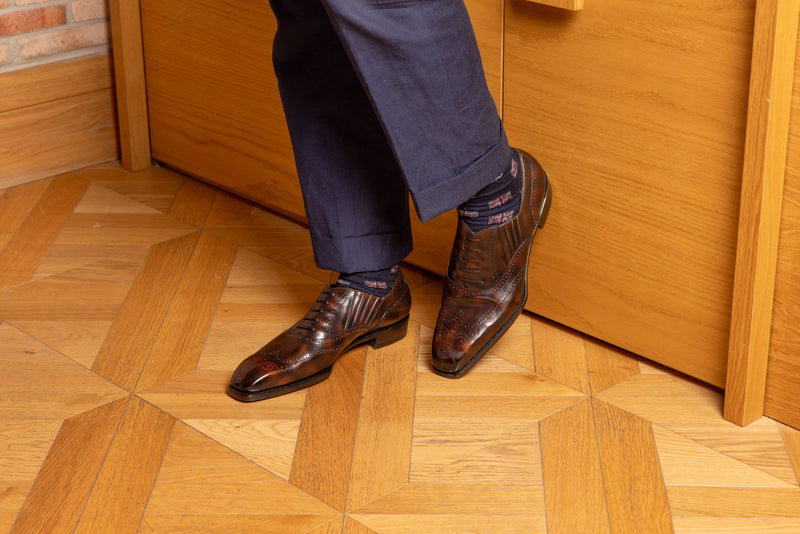
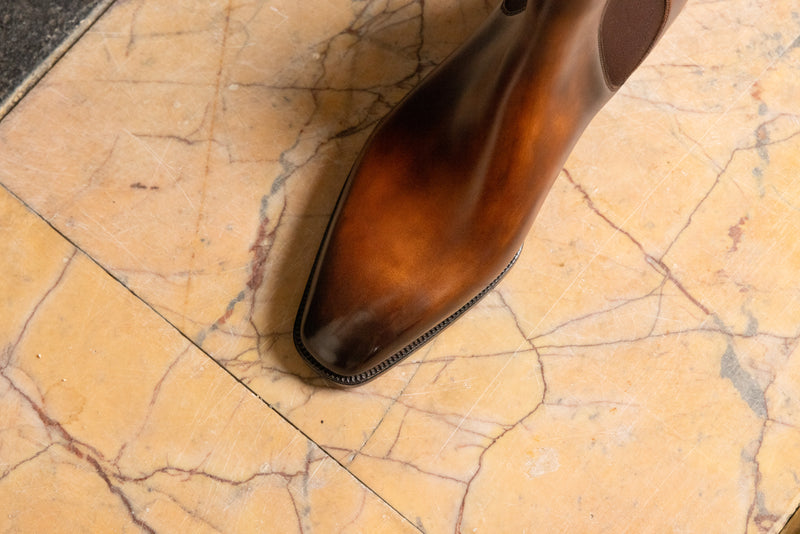
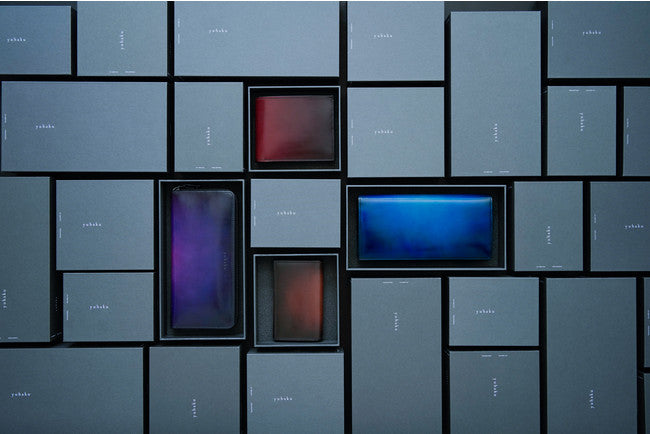
Following the treatment of their leather, their production consists of slow, multi-stage hand dyeing. Translucent pigments are applied gradually by hand, allowing colour to penetrate the fibre structure layer by layer rather than just coating it. This achieves immersive and unique tonal depth that inspires the imagination.
After dyeing, the leather remains receptive to external influence: oils from the hand, friction at stress points, and exposure over time.
Due to premium materials and honed artisan skill, beautiful aging occurs naturally:
-
the surface darkens and enriches through contact
-
edges soften and burnish
-
colour migrates, gaining further depth and clarity
Patina as Artwork
At Yuhaku, colour is approached as an emotive medium rather than just an aesthetic aspect to a piece. The artisans speak of their dyeing process as a deeply mindful act, attentive to how colour will be felt in everyday life, not simply how it appears upon first glance.

Within their blue patina, for example, the nuanced colour gradation works to reveal the sight of the sky, the rumbling of waves or the rarity of a sapphire – the aesthetic bliss elicited from its careful production connects buyers to other states of being, and the final outcome is freeing and transportive by the way of Art.
Yuhaku’s work challenges prevailing ideas of what everyday leather goods should be. Their ostensible presentations of style are rooted deeply in a sustained commitment to quality processes, expressive materials and a desire to move clients as they behold pieces. The workshop’s approach, grounded in Japanese craft principles, helps demonstrate how deeply considered production can shape global standards of quality and meaning.